What are you looking for?
 author
A competitive DOTP quotation should not be evaluated on price alone. Batch consistency, technical documentation, packaging suitability, formulation compatibility, and supply reliability can all affect the actual procurement cost and the stability of downstream production. For this reason, the evaluation of a DOTP plasticizer supplier should be completed before entering the formal RFQ stage.
The qualification process should begin with a clear definition of the PVC application and corresponding performance requirements. Buyers can then establish measurable DOTP specifications, review TDS, COA, and SDS documentation, assess batch-to-batch consistency and production capacity, and validate representative samples under actual formulation and processing conditions. Once these technical requirements have been confirmed, commercial factors such as price, MOQ, lead time, packaging, and logistics can be compared on a consistent basis.
Yuanyide specializes in the production of DOTP, DPHP, TOTM, DOA, DOS, and other plasticizers for a range of PVC applications. From a supplier qualification perspective, technical suitability, product consistency, documentation support, and continuous supply capability should be established before commercial terms are used to make the final purchasing decision.

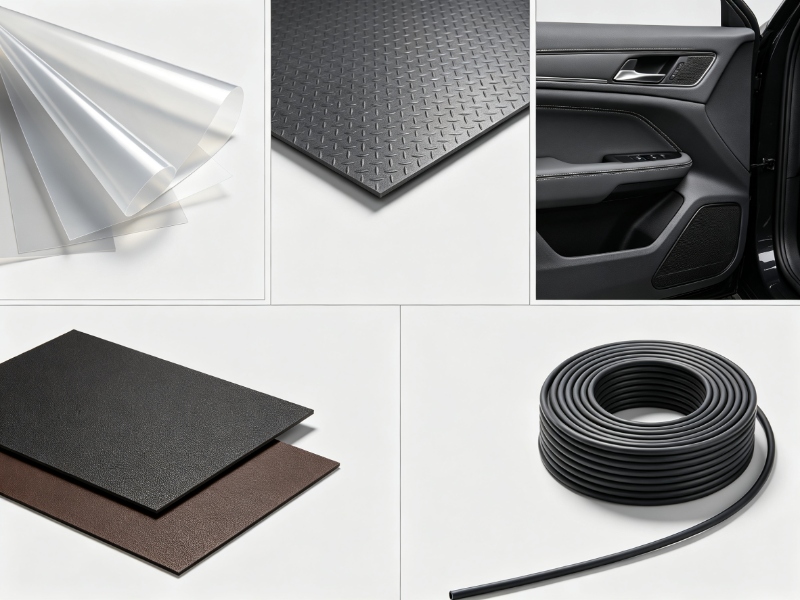
The end application determines which DOTP properties and finished-compound performance criteria should receive the greatest attention. Cable compounds may emphasize electrical properties and stability, while artificial leather may require closer attention to migration, softness, and appearance. For wire and cable applications, DOTP should be evaluated as part of the complete PVC formulation. Plasticizer properties alone do not determine the electrical, mechanical, or aging performance of the finished compound. Film and flooring producers may focus on processing consistency, flexibility, color, and durability.
A practical qualification process is to start with the finished PVC application, translate its performance requirements into formulation targets, define the DOTP specification, and then qualify suppliers against those requirements. Regulatory suitability should also be confirmed for the buyer’s own formulation, finished article, and destination market rather than assumed from the plasticizer alone.
Turn Application Needs into Measurable Acceptance Limits
Create an internal specification sheet before comparing quotations. This ensures that all shortlisted suppliers quote against the same technical specification and acceptance criteria.
Yuanyide’s current Dioctyl Terephthalate (DOTP) specification follows HG/T 2423-2018 and illustrates the parameters buyers can review:
| Parameter | Yuanyide Specification | Purchasing / QC Relevance |
| Ester content | ≥99.5% | Purity and lot-to-lot consistency |
| Color | ≤30 Pt-Co | Color-sensitive and appearance-critical PVC |
| Acid value | ≤0.05 mg KOH/g | Incoming QC and formulation consistency |
| Density at 20°C | 0.981–0.985 g/cm³ | Incoming QC and lot consistency |
| Water content | ≤0.05% | Processing consistency and storage control |
| Flash point, open cup | ≥210°C | Fire-safety, storage, handling and transport assessment |
| Volume resistivity | ≥2×10¹² Ω·cm | Relevant to electrical PVC formulation evaluation |
A supplier specification is a starting point, not the buyer’s final acceptance standard. Final limits should reflect the PVC resin, stabilizer system, processing conditions, performance targets, and end use.
In practical terms, the TDS defines the technical target, the COA provides batch-specific evidence, and the SDS supports safe use and logistics. Product identity, grade designation, key specifications, and hazard information should be consistent across the TDS, COA, and SDS.
One conforming batch does not prove long-term consistency. Request COAs from multiple recent production lots and evaluate lot-to-lot variation in ester content, acid value, color, density, moisture, and other application-critical parameters. Unexplained lot-to-lot variation can increase incoming inspection frequency, formulation adjustment, and quality-control workload even when individual batches remain within specification.
At Yuanyide, our factory operates six plasticizer production lines with an annual comprehensive production capacity of 50,000 tons. The factory is equipped with testing instruments, including advanced testing instruments and other equipment imported from Germany. Buyers should still compare these capabilities with their actual monthly demand, lead-time expectations, and repeat-order requirements rather than evaluating production capacity as an isolated number.
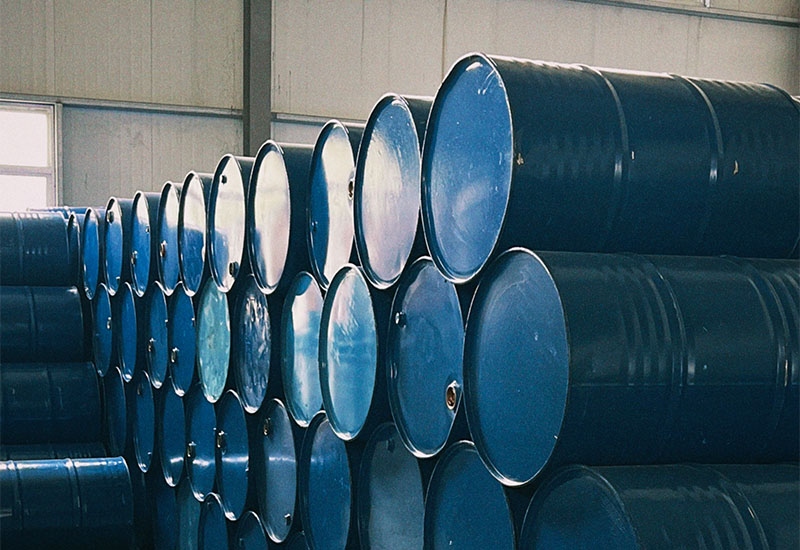
Ask how the supplier will support regular orders, peak demand, packaging, and shipment planning. Yuanyide offers steel drums and IBC tanks for Dioctyl Terephthalate (DOTP). Our company also supports both FCL and LCL arrangements and transport by sea, train, or truck.
A specification sheet cannot reproduce the behavior of a complete PVC compound. For formulation-sensitive projects, test a representative sample before final commercial negotiation.
Hold the PVC resin, stabilizer package, plasticizer dosage, additive package, and processing conditions constant when comparing suppliers. Depending on the application, validation may cover processing behavior, flexibility or hardness, color, migration, heat aging, low extractability, or electrical performance.
Yuanyide generally provides 100 mL or 200 mL samples free of charge, with shipping costs borne by the customer. Please confirm the quantity required for your test plan before dispatch.
Our website also specifically recommends using sample orders to validate product quality before moving to a full order.
Record each candidate as approved, conditionally shortlisted, pending evidence or rejected. State any outstanding tests in the RFQ, and complete the required technical and commercial approvals before placing a bulk order.
A standardized DOTP RFQ should state product identity, required specification, target application, quantity and forecast, packaging, destination port, Incoterm, documentation requirements, delivery schedule, and sample-validation status.
After qualification, compare price, MOQ, packaging, lead time, logistics, payment terms, document support, and repeat-order stability on the same basis. The lowest unit price does not necessarily result in the lowest total cost of ownership (TCO). Buyers should consider product price, freight, packaging, inspection costs, lead time, rejection risk, and supply reliability together.
A robust DOTP supplier qualification process should follow a defined sequence: application requirements, specification baseline, TDS/COA/SDS review, batch consistency, supply capability, sample validation, shortlist, standardized RFQ, and commercial comparison. This makes quotations technically comparable and reduces avoidable uncertainty before a bulk order.
At Yuanyide, we combine plasticizer manufacturing, quality control, sample support, technical guidance, and multiple packaging options to support this process. Our services cover R&D, manufacturing, technical consultation, application support, and procurement services.
Contact Yuanyide to request Dioctyl Terephthalate (DOTP) technical information, a sample, and a quotation based on your application and purchasing requirements.
A: Request the current TDS and SDS plus a recent batch COA. For regulated applications, also request testing or compliance documents relevant to the destination market and finished product. Check that product identity and key specifications are consistent across the documents.
A: Compare COAs from several recent batches rather than reviewing only one. Track ester content, color, acid value, density, water content, and any application-critical property, then compare those results with your own incoming inspection and formulation data.
A: For formulation-sensitive PVC products, sample testing is recommended before final supplier qualification. Use the same resin, additives, dosage, and processing conditions so supplier-to-supplier results are comparable.
A: Include the required specification, application, quantity and forecast, packaging, destination, Incoterm, required documents, delivery schedule, and payment requirements. Giving every shortlisted supplier the same information makes price, MOQ, lead time, and logistics easier to compare.

The company adheres to the core concept of "customer-oriented, quality-oriented, excellence-oriented, and innovation-oriented", provides the market with cost-effective high-quality products with full passion, and promises first-class corporate services with honest faith. Continuously innovate and strive to become a permanent partner of customers.