 author
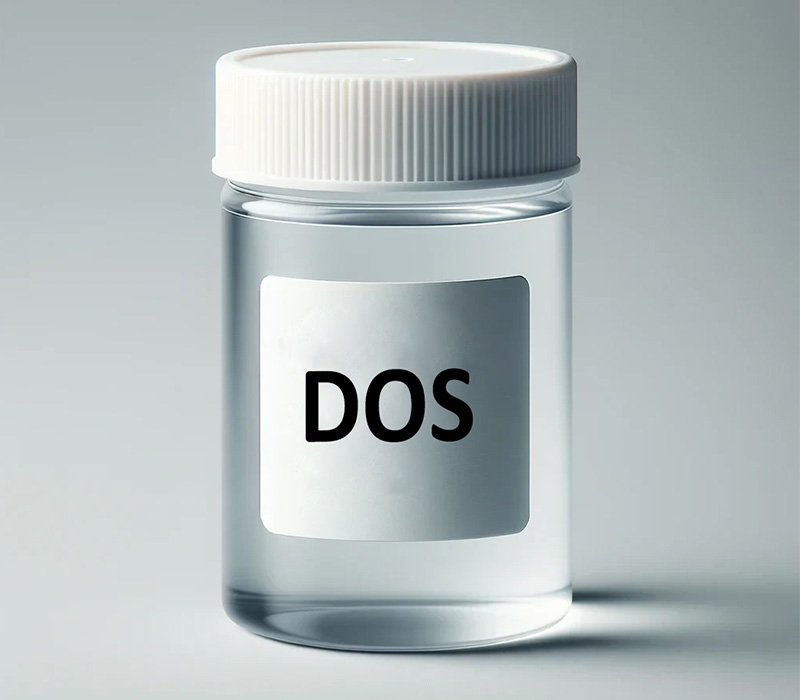
 In the evolving world of material science, selecting the right plasticizer can significantly impact the longevity and performance of polymer products. Dioctyl Sebacate (DOS), a premium plasticizer, offers exceptional advantages in enhancing flexibility, durability, and stability, especially in demanding environments. Unlike traditional plasticizers, DOS delivers superior cold-temperature flexibility and resists oxidation and UV degradation, making it ideal for everything from outdoor cables to automotive components.
Dioctyl Sebacate (DOS) serves as a common plasticizer that resists heat well. It also handles light exposure and provides solid electrical insulation. DOS delivers strong flexibility and stays stable at low temperatures without much evaporation. It does not mix with water or oil. Yet, it blends nicely with PVC and PU. These traits—thermal endurance, bendability, and electrical strength—position DOS as a flexible option in polymer work today. The formula C28H46O4 points to a lengthy chain from sebacic acid linked with octanol. This setup boosts its water-repelling nature and smooth inner flow.

The success of a plasticizer like DOS hinges on its fit within the polymer structure. Its extended ester chain slips between polymer strands. This action cuts down forces like Van der Waals bonds. Consequently, molecules gain more freedom to move. Rigidity drops, and stretchiness rises.
In PVC or polyurethane setups, DOS works as a chain smoother that eases tangles. As you add more DOS, the open space inside the polymer grows. Segments then shift more easily under pressure. Still, too much can cause splits or leaks. So, finding the right amount matters for good bend and solid form.
DOS affects polymers mainly through changes in glass transition temperature (Tg). It boosts open space between chains, which drops Tg a lot from plain polymers. This change keeps items bendy even in freezing cold. Wire covers and car seals on winter roads benefit from this. For example, seals with DOS stayed pliable at -30°C, while those without stiffened and cracked during field tests.

Adding DOS alters pull strength, stretch before breaking, and bend resistance based on how much you use and the polymer kind. Pull strength often dips a bit from weaker chain links. But stretch can double in plain PVC blends. Bend-back ability gets better, too, since chain rubbing lessens after adding the plasticizer.
DOS fits with polyvinyl chloride, vinyl chloride-vinyl acetate copolymer, polymethyl methacrylate, nitrocellulose, ethyl cellulose, and synthetic rubber. It’s even polarity matches polar and half-polar polymers well.
Heat endurance counts a lot in hot processes like pushing out or injecting shapes. It adds smooth flow when warm, which gives products a clean look and nice touch. This smoothness cuts drag between melt layers in tools. Surface quality improves, and power use drops.
With a boiling point over 400°C and low steam pressure, losses from air escape stay small even at temperatures up to 200°C. To stop shifts in long heat times or warm storage, add helpers as needed for the job.
Care for the environment shapes choices in materials for many fields. Against old phthalates like DBP, which regulators limit for health risks, DOS stands as a safer pick with less harm to nature. At Yuanyide, we push green changes in industry and society. Our work targets three main trends in lasting practices—bio-based options, shifts to new energy, and reuse cycles. We weave these into research plans. This way, new plasticizers meet world rules and aid clean-making setups.
The strong, cold bend of DOS makes it key for car wire bundles, plane insulation, fake leather seats, glues, and bendy sheets in rough spots. It works well for cold-proof wire and cable mixes, fake leather, sheets, and glues. Plus, its stand against UV fade keeps colors steady after long outside time. This helps build covers or outdoor wires.
Better fight against air aging, stretches use life in heat swing spots common in transport, where temperatures change fast.

When getting pure Dioctyl Sebacate, steady purity shapes how well end items work, especially in exact jobs like medical tubes or electronic covers. We make sure each run follows quality rules for steady output. We have back checks by SGS, BV, and Intertek for fair and clear checks.
Our checks use GC–MS patterns for purity checks, and FTIR scans to match HG/T 3502-2008 rules.
As full-service providers, we team up tightly with client research groups. We give mixed advice fit to their machine setups. We supply full custom plasticizer help for research, making, advice, tech tips, and buying. Our links go past sales. We add science know-how to new idea flows. This builds growable fixes that match market shifts.
With solid delivery lines and good stock handling, we promise a steady flow for big jobs around the world.
Dioctyl Sebacate (DOS) has proven itself to be a crucial component in the manufacturing of flexible, durable, and high-performance polymer materials. With its superior cold-temperature performance, resistance to UV degradation, and minimal evaporation, DOS outperforms traditional plasticizers, especially in harsh environmental conditions. Moreover, its compatibility with a range of polymers and ability to enhance mechanical properties make it an invaluable asset in a variety of industrial applications, from automotive wiring to roofing materials.
By choosing DOS, manufacturers can improve both the functionality and lifespan of their products, ensuring better performance and lower maintenance costs.
Ready to take your polymer products to the next level with DOS? Contact us today to discuss how our high-quality plasticizers can meet your specific needs and enhance the performance of your materials.
A: Adding DOS cuts Tg a lot by growing open space in polymer setups. This keeps bending even under the freeze point.
A: Yes. Mixing lets you adjust softness, bounce, and heat hold for the job’s needs.
A: Yes. Our research staff works right with client groups. They share mix tips and process tweaks for top results in all polymer types.

The company adheres to the core concept of "customer-oriented, quality-oriented, excellence-oriented, and innovation-oriented", provides the market with cost-effective high-quality products with full passion, and promises first-class corporate services with honest faith. Continuously innovate and strive to become a permanent partner of customers.