¿Qué estás buscando?
 León
For manufacturers using flexible PVC, DOTP is often a recurring raw-material requirement. Buyers therefore need to evaluate more than the quoted price per metric ton. Availability, lead time, packaging, freight, and quotation validity can all affect the buyer’s total procurement cost and landed cost.
As a plasticizer manufacturer and supplier, Yuanyide uses its production and procurement experience to help buyers understand the main factors behind DOTP quotations. From a manufacturer’s perspective, understanding the main factors behind a DOTP quotation helps buyers compare offers more accurately and plan purchases with less short-term cost risk.
A DOTP quotation reflects several variables: feedstock cost, plant operating conditions, inventory, downstream demand, energy and processing expenses, packaging, logistics, and commercial terms. These factors do not always move in the same direction. DOTP may remain relatively stable when one feedstock rises, or its quotation may change even when raw-material prices appear relatively unchanged.
The first cost area to watch is feedstock. Because 2-EH is a key feedstock in DOTP production, a sharp movement in its price can create direct cost pressure for DOTP producers. Upstream plant maintenance, supply disruptions, lower regional inventory, or stronger demand for 2-EH can therefore affect new offers. The cost of terephthalic acid (TPA/PTA) feedstock can also affect DOTP production economics.
However, feedstock cost pass-through is not necessarily one-to-one or immediate. Finished-product inventory, existing contracts, market competition, plant operating rates, and downstream demand can all influence the timing and extent of cost pass-through into DOTP quotations.

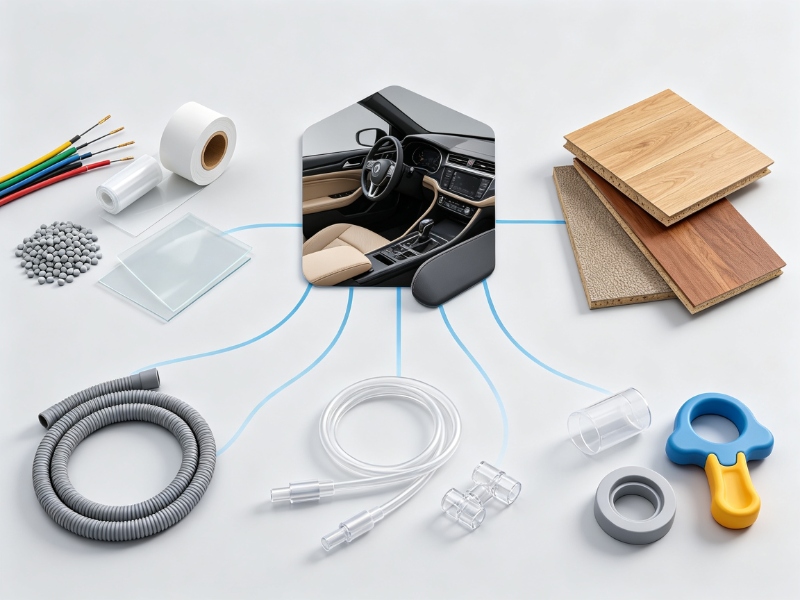
Demand is the other side of the pricing equation. Yuanyide lists DOTP for a range of flexible PVC applications, including wire and cable materials, films, automotive interiors, flooring, artificial leather, hoses, medical devices, and toys.
Our published specification for DOTP (CAS 6422-86-2) includes ester content of at least 99.5%, a flash point(open-cup)of at least 210°C, and volume resistivity of at least 2×10¹² Ω·cm. Yuanyide also highlights low volatility, electrical insulation, thermal stability, and migration resistance among the product’s performance characteristics.
When downstream demand for flexible PVC applications such as wire and cable, flooring, artificial leather, and automotive components strengthens, demand for plasticizers may also increase. If producer inventories are already low, stronger downstream orders can tighten spot availability. By contrast, weaker demand may slow inventory turnover even when feedstock costs remain firm. Raw-material cost and end-use demand should therefore be evaluated together. Final product suitability should be validated through the buyer’s own formulation, processing conditions, and finished-product testing.
Plant operating rates can change supply conditions quickly. Planned maintenance, unexpected shutdowns, or reduced production loads can decrease the volume available for spot orders. Low finished-product inventory combined with steady demand may also result in less spot availability and longer lead times.
In addition to feedstock, manufacturing costs include energy, utilities, labor and quality control. Storage, packaging and delivery costs may be included in or added to the quotation, depending on its scope.
En Yuanyide, our factory uses automated production equipment as well as raw-material and finished-product storage tanks. Yuanyide operates six plasticizer production lines across a 21,845-square-meter facility, with two workshops and two warehouses and an annual comprehensive production capacity of 50,000 tons.

Lead time connects market conditions with actual product availability. A short lead time may reflect available finished-product inventory, available production capacity, or an established logistics schedule. A longer lead time may reflect stronger order intake, tighter inventory, production scheduling, packaging preparation, or logistics congestion.
Packaging also changes the quotation basis. Yuanyide currently offers DOTP in Steel Drums, IBC Tanks, and Flexitank. Steel drums are typically used for smaller packaged shipments, while IBC tanks provide an intermediate bulk packaging option for industrial handling and storage. Flexitanks may be suitable for larger bulk liquid shipments, subject to carrier, destination, loading, and unloading requirements. Flexitanks can be used for bulk liquid transportation when shipment volume, carrier requirements, destination infrastructure, and unloading conditions are suitable.
Freight and Incoterms create another important difference. FOB, CFR, and CIF quotations should be compared on the same commercial basis because they allocate freight, insurance, and other responsibilities differently. Buyers should therefore compare quotations using the same Incoterm, destination port, packaging, quantity, and delivery window. The lowest factory price is not necessarily the lowest landed cost.
| DOTP Price Factor | Potential Impact | What Buyers Should Monitor |
| 2-EH | Feedstock cost | Price trend and supply |
| TPA/PTA or DMT | Terephthalate feedstock cost | Relevant production route |
| Plant operating rate | Product availability | Maintenance and operating status |
| Finished-product inventory | Spot availability | Supplier stock position |
| PVC demand | Order intensity | Wire/cable, flooring, automotive demand |
| Freight | Landed cost | Ocean freight to destination |
| FX rates | Export quotation | Currency movement |
| Incoterms | Quotation scope | FOB/CFR/CIF |
These factors should be considered together, and their impact on DOTP quotations should be assessed based on actual market conditions. No single indicator should be used alone to judge short-term price changes.
For regular consumers of DOTP, staggered purchasing or split orders may help reduce exposure to a single purchase price, but they do not guarantee a lower average purchase price and may increase freight, handling, or financing costs. Buyers should therefore consider inventory carrying costs, storage capacity, cash flow, and supplier availability when deciding on an order strategy. Buyers with a predictable production season should check supplier capacity, inventory, lead time, packaging availability, and shipping schedules before inventory reaches the buyer’s minimum operating or replenishment level.
Confirm quote expiry and the conditions for price acceptance, stock reservation and production allocation. Do not assume that a quotation reserves inventory.
A complete RFQ allows suppliers to prepare a quotation based on the buyer’s actual product, logistics, and delivery requirements. When contacting Yuanyide, provide your required quantity, destination country or port, packaging preference, Incoterm, target delivery date, application, and whether your demand is one-time or recurring. If you require particular specifications, COA information, or test documents, state them clearly when requesting the quotation.
Yuanyide is a plasticizer manufacturer and supplier offering DOTP, DPHP, TOTM, DOA, DOS, and other plasticizer products, supported by in-house production, R&D, technical guidance, procurement services, and sample-order support. Our DOTP is available alongside DPHP, TOTM, ORACIÓN, DOS, and other plasticizer solutions. Yuanyide also provides sample-order support for customers who want to evaluate product quality before moving to a full order.
If you are planning your next DOTP purchase, send us your quantity, packaging method, destination port, Incoterm, and required delivery date. We can check the relevant production and logistics conditions and prepare a quotation based on your actual purchasing requirements.
A: Before comparing DOTP quotations, buyers should first confirm that the offers cover the same product specification, net quantity, packaging, payment terms, and delivery scope. Differences in suppliers’ internal costs, inventory positions, production schedules, packaging costs, freight arrangements, and quotation validity may also contribute to price differences. A lower quotation should not, by itself, be taken as an indication of inferior product quality, while a higher quotation should not automatically be interpreted as evidence of superior certifications or product credentials.
A: Not necessarily. A longer lead time can reflect tighter production scheduling, lower inventory, packaging constraints, or logistics congestion. Lead time is a useful availability signal, but it should not be treated as a stand-alone price forecast.
A: Please provide your quantity, destination port or country, packaging preference, Incoterm, required delivery date, application, and whether the order is one-time or recurring. Any required specifications or test documents should also be stated clearly.

La empresa se rige por el concepto fundamental de "orientación al cliente, a la calidad, a la excelencia y a la innovación", ofreciendo al mercado productos de alta calidad a precios competitivos con total dedicación y brindando servicios corporativos de primera clase con honestidad y confianza. Innova continuamente y se esfuerza por convertirse en un socio permanente para sus clientes.